Yet another “Design Space”: Using ambiguity for design tool construction
Project
Master Research Project
Feb 2020 - Jul 2020Skills
- none found -
Approaches
Tools
- none found -
Topics
Mentioned In
About
Project Description
When engaging in a design process, there are many possible directions in which the process can develop. Difficulties in making progress can arise from numerous factors, such as emotional state, context, perspective, the scope of the design, and many others. Ultimately, the designer needs to identify and confront these obstacles in order to keep the design process moving toward the desired outcome.
Rather than prescribing what should be done to resolve these situations, the goals of this study shifted toward exploring how designers can reflect on the current state of their design process and their individual design style. The concept of Design Space proved to be highly diverse, presenting an opportunity to capture individual aspects of designers and their personal understanding of the design process.
Exploring the Practical Implications of Defining the Term "Design Space" for the Design Process
Abstract
Design processes are predominantly viewed as iterative and rational, a perspective reflected in most design frameworks, methodologies, and tools. This research challenges that perspective by proposing a different approach to constructing design tools.
The purpose of this study was to explore how design students in the Netherlands interpret the concept of Design Space and to develop a practically oriented definition that could serve as the foundation for a design tool. Using an open research approach informed by grounded theory, the study found that participants' interpretations of Design Space had practical implications and could indeed be used to construct such a tool. A common characteristic among all definitions was that each Design Space focused on a process and encompassed the essential aspects of designing.
Aim
The original motivation for this research stemmed from the struggles design students experience during projects, often characterized by losing time and not knowing what action to take next. This condition is commonly described as "being stuck" or "hitting a wall."
Through discussions and preliminary interviews, the research evolved toward exploring the practical implications of defining the concept of Design Space and understanding how such a definition could support the design process.
Participants
To ensure the findings remained closely aligned with the intended target group, only design students participated in the study. Participants were recruited voluntarily and partly through snowball sampling.
The main study consisted of nine participants, ranging in age from 21 to 26 years, studying at both bachelor's and master's levels. Four participants came from the Design Academy Eindhoven, while five were from TU Eindhoven, broadening the range of design perspectives represented.
For the preliminary interviews, three teachers and a separate sample of seven Industrial Design students from TU Eindhoven were also interviewed.
Method
The preliminary interviews indicated that methods from the interpretivist paradigm would be most appropriate. A grounded theory approach was therefore selected because of its openness to different participant perspectives.
It was expected that participants would define Design Space differently, making it essential for the emerging theory to remain flexible and open to revision throughout the research.
Research Question
How can design students' definitions of the term Design Space be used to construct a practical understanding of the concept that captures individual approaches to design processes?
Procedure
Because of the SARS-CoV-2 outbreak, all interviews were conducted remotely via video calls and were not recorded.
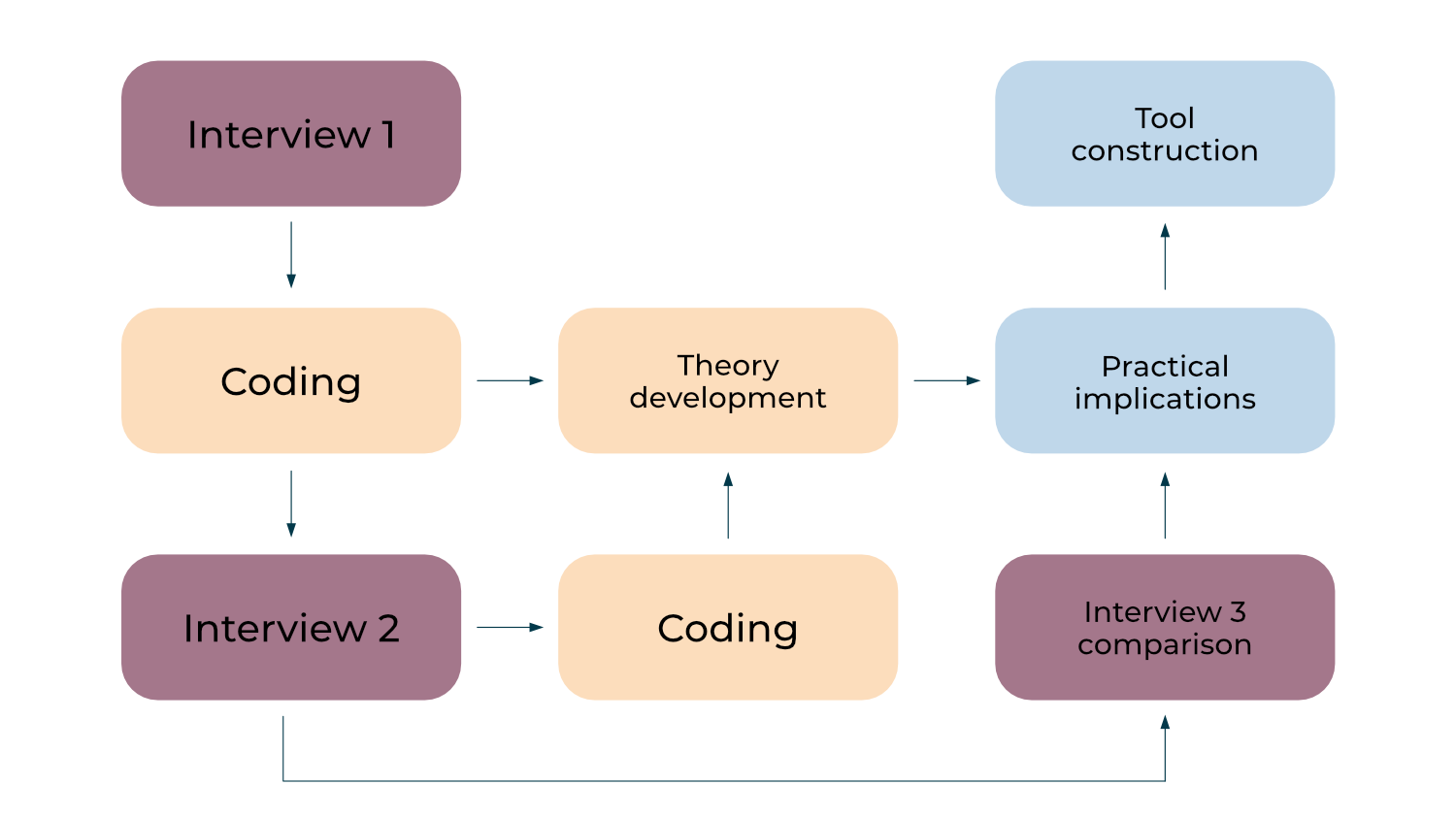
The findings from each interview informed the purpose and structure of the subsequent interview. In total, one preliminary interview and three core interview rounds were conducted.
The preliminary interviews established the general direction of the study. During the first core interview, participants were introduced to the concept of Design Space and asked for their initial interpretations. The second interview explored these definitions in greater depth using a structured template.
Finally, the complete collection of nine participant definitions was presented back to every participant. Their opinions on the different interpretations were used to identify practical implications and further develop a theory of Design Space.
Findings
Participants generally described Design Space as a flexible and dynamic concept that captures the current state of a design process.
Physical interpretations frequently portrayed Design Space as an actual space in which design work takes place. Its temporal position was consistently anchored in the present while simultaneously looking toward future opportunities and potential developments.
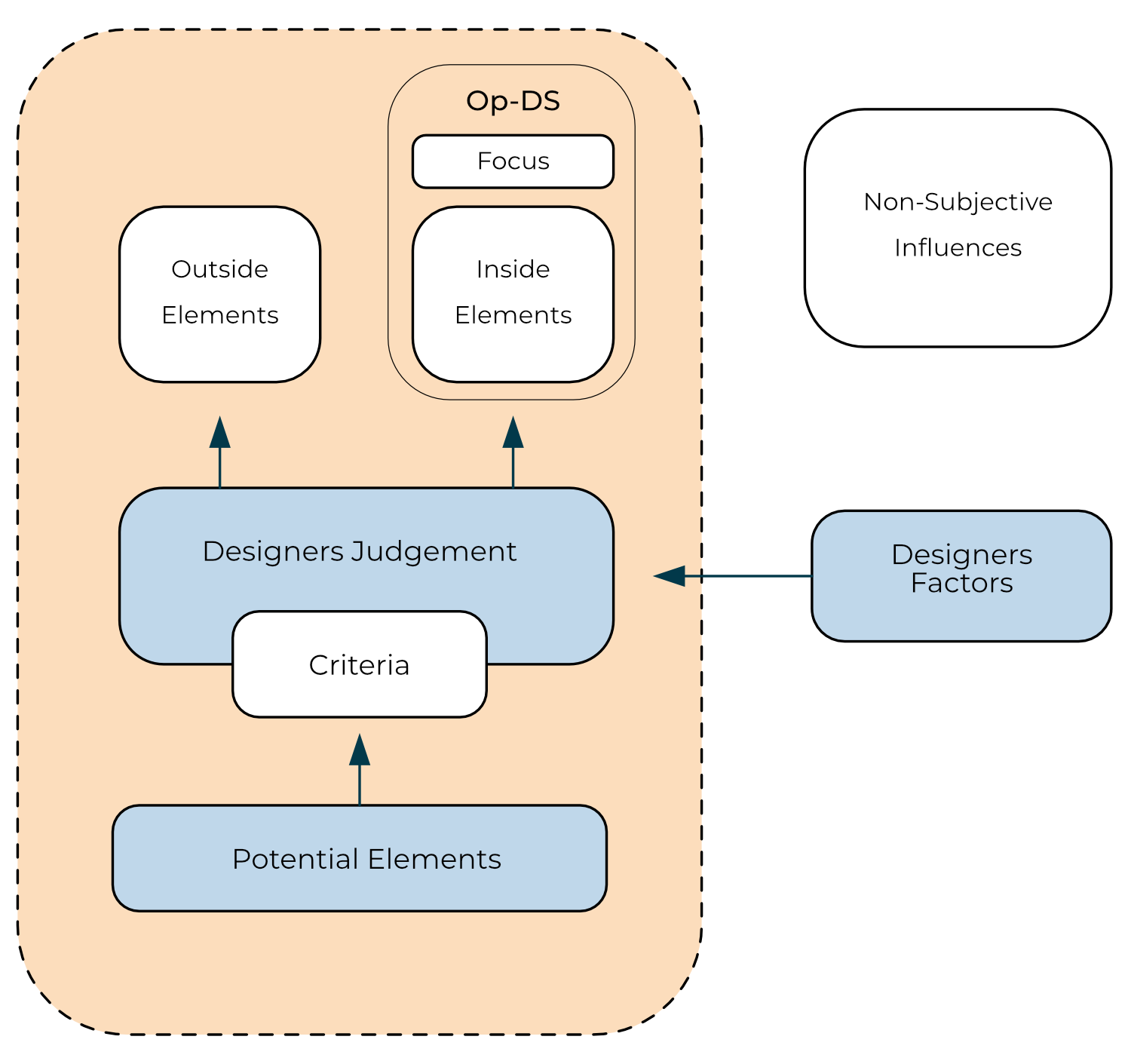
The findings suggest that judgments about where elements belong within a Design Space are continuous and closely connected to the current stage of the design process.
The original motivation of this study was to provide students with non-prescriptive methods and tools that encourage individual ways of designing. Together with Heape's work, this suggests that design education may benefit from reconceptualizing design processes through discussions about the meaning of the term Design Space.
Operational Design Space
Building upon the previous findings, a practical interpretation of Design Space was developed, referred to as the Operational Design Space (Op-DS).
The name was intentionally chosen to distinguish this interpretation from other academic and personal definitions. Its purpose is to help students capture the current state of their design process by documenting their own approach rather than prescribing future actions.
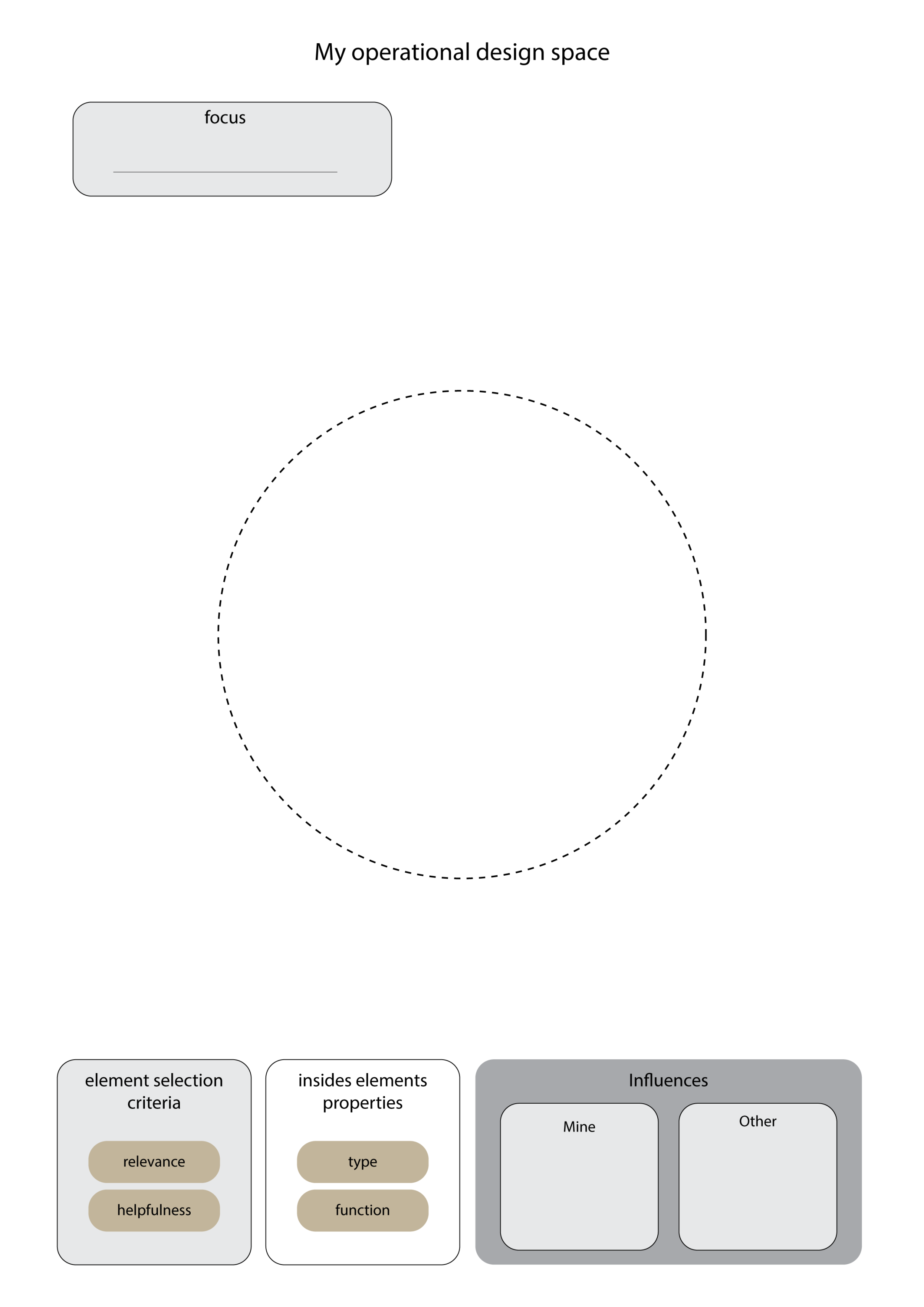
The Operational Design Space begins as an empty space that is redefined each time it is used. Instead of providing instructions, it interacts with the student through reflective questions.
The concept is intended as an outline that would require further testing to evaluate its effectiveness. It is designed to be simple enough to use anywhere with only a sheet of paper and a pen. A circle drawn in the center of the page represents the Design Space, distinguishing what belongs inside from what remains outside.
The following questions guide its use.
Focus
What process do you want to capture?
Are you solving a problem, selecting ideas, or working on another design activity?
Usefulness & Relevance
What is relevant and helpful for this process?
Your answer determines whether an element belongs inside or outside the Operational Design Space.
Type & Function
What type of element is it? (e.g., design tool, physical tool, expert, stakeholder, resource, idea, or concept)
What function does this element serve in relation to the focus of the Operational Design Space?
Influencing Factors
After enough elements have been categorized, reflect on the following:
What influenced your judgments?
What is your vision for the project?
Where would you like the process to develop?
What are your goals?
Did emotions influence your decisions?
Other Factors
Can the selected elements themselves influence your Design Space?
Are there external processes or circumstances beyond your control that affect your Design Space?